Case 02 · Robotics · Brand architecture

One company, twomarkets, zeroconfusion.

Ekso Bionics — Marketing Manager (Head of Brand & Marketing Strategy)
2019 – 2020 · Publicly traded · NA, EMEA & APAC

Exoskeletons that help stroke patients walk again — and protect construction workers from injury. Two transformative use cases, served by one brand, with one voice, as if they were the same product for the same buyer. They weren't.
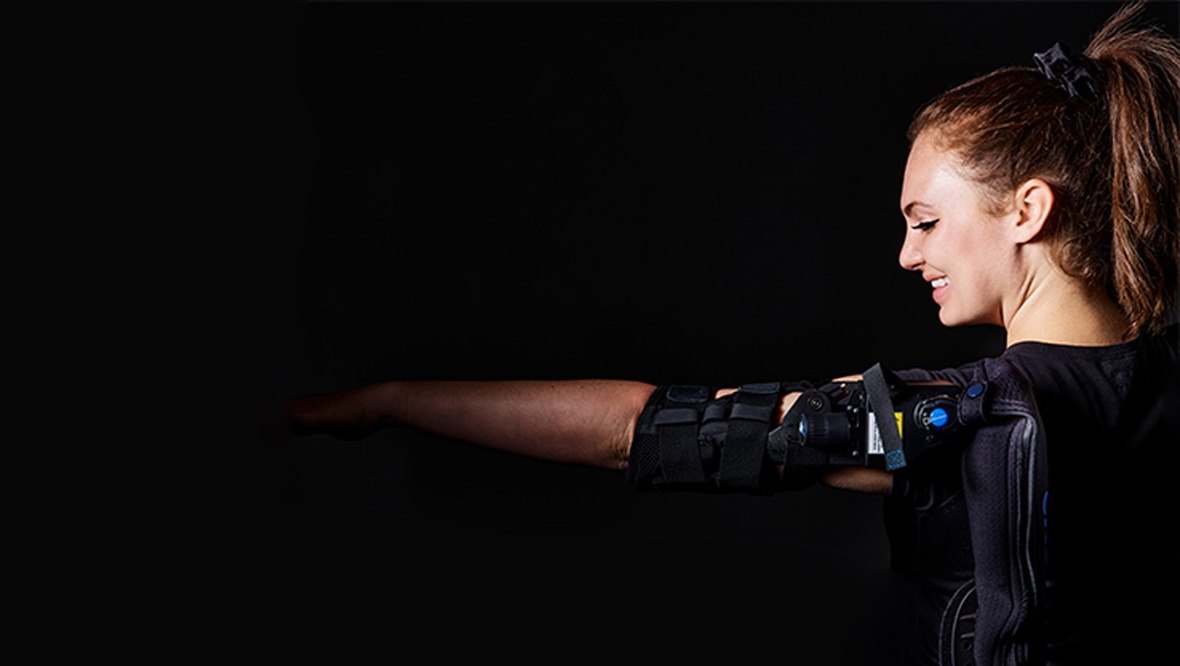
Ekso Bionics exoskeleton — clinical rehabilitation
Lift in qualified leads
& digital engagement
98
Account expansion during
strategic repositioning
3
Global product launches
with coordinated press
5
Languages — full rebrand
NA · EMEA · APAC
The situation

Ekso Bionics created technology that didn't fit any existing category. Their exoskeletons helped stroke and spinal-cord-injury patients walk again in clinical rehabilitation, and protected construction workers from repetitive injury on job sites.

Hospital-system and distributor clinical buyers needed evidence, reimbursement pathways, and workflow integration. Industrial buyers ranged from enterprise safety managers purchasing at scale to individual tradespeople buying direct. Using inspirational mobility language for all of them served none of them. The company sounded like a robotics lab searching for markets rather than a focused solutions partner. Sales cycles dragged. Customers struggled to justify purchases internally.

The diagnosis

Everyone read it as a messaging problem. The break was structural.

Ekso had two fundamentally different businesses operating under one brand with no architecture. No shared north star, no product-level differentiation, no audience-specific proof. This ran deeper than language — it was an identity problem. You can't write your way out of a structural incoherence.
Before
After
Single inspirational brand voice for two incompatible audiences
Unified brand architecture with two distinct product narratives
Clinical content confused industrial buyers — and vice versa
Audience-specific proof frameworks for clinical and industrial
No proof architecture: claims weren't backed by evidence
Evidence-led positioning across both business lines
No eCommerce: every sale required a human rep
Industry's first eCommerce channel for direct purchase
No recurring revenue: capital equipment only
Industry's first subscription model for clinical adoption
The work

I rebuilt the brand from first principles, redesigning the positioning logic. The architecture needed to acknowledge the fundamental difference between clinical and industrial markets while establishing what unified them: evidence-backed, purpose-built exoskeleton technologies that improve human outcomes.

Brand architecture
Rebuilt the entire positioning logic — a unified brand spine with two distinct product narratives that laddered up without forcing false coherence between incompatible markets.
Full rebrand
New logo, design language, and multilingual website across five languages, executed alongside global product launches in clinical and industrial markets simultaneously.
Narrative shift Clinical
"Look what this robot can do" became "Look what your rehab system can achieve" — repositioning EksoHealth around patient outcomes, therapist workflow, and provider ROI.
Narrative shift Industrial
"Exoskeletons make workers superhuman" became "Exoskeletons reduce injuries and protect your workforce" — repositioning EksoWorks around occupational ergonomics and measurable safety ROI.
eCommerce Industry first
Launched the category's first direct-to-consumer eCommerce channel, enabling self-service purchase without rep involvement and expanding geographic reach and buyer types.
Subscription Industry first
Introduced the category's first recurring-revenue model for clinical exoskeletons, lowering the adoption barrier from capital expenditure to a manageable recurring cost.
Marketing flywheel
Created customer-marketing activation packages (~$20K each): hospitals paid Ekso to produce co-branded content and patient stories — the proof Ekso needed to sell the next hospital.
What this demonstrates

Premium hardware brands in new categories face a specific challenge: the technology is genuinely impressive, but impressive doesn't close deals — credibility does. The work at Ekso was building the proof infrastructure that earns the right to be taken seriously: evidence-led positioning, audience-specific narratives, and commercial models that match how buyers actually buy. Both commercial innovations were subsequently adopted by competitors, validating them as category-level shifts.

The result wasn't just a better-looking brand. It was a company that moved from novelty to necessity in two completely different markets at once.
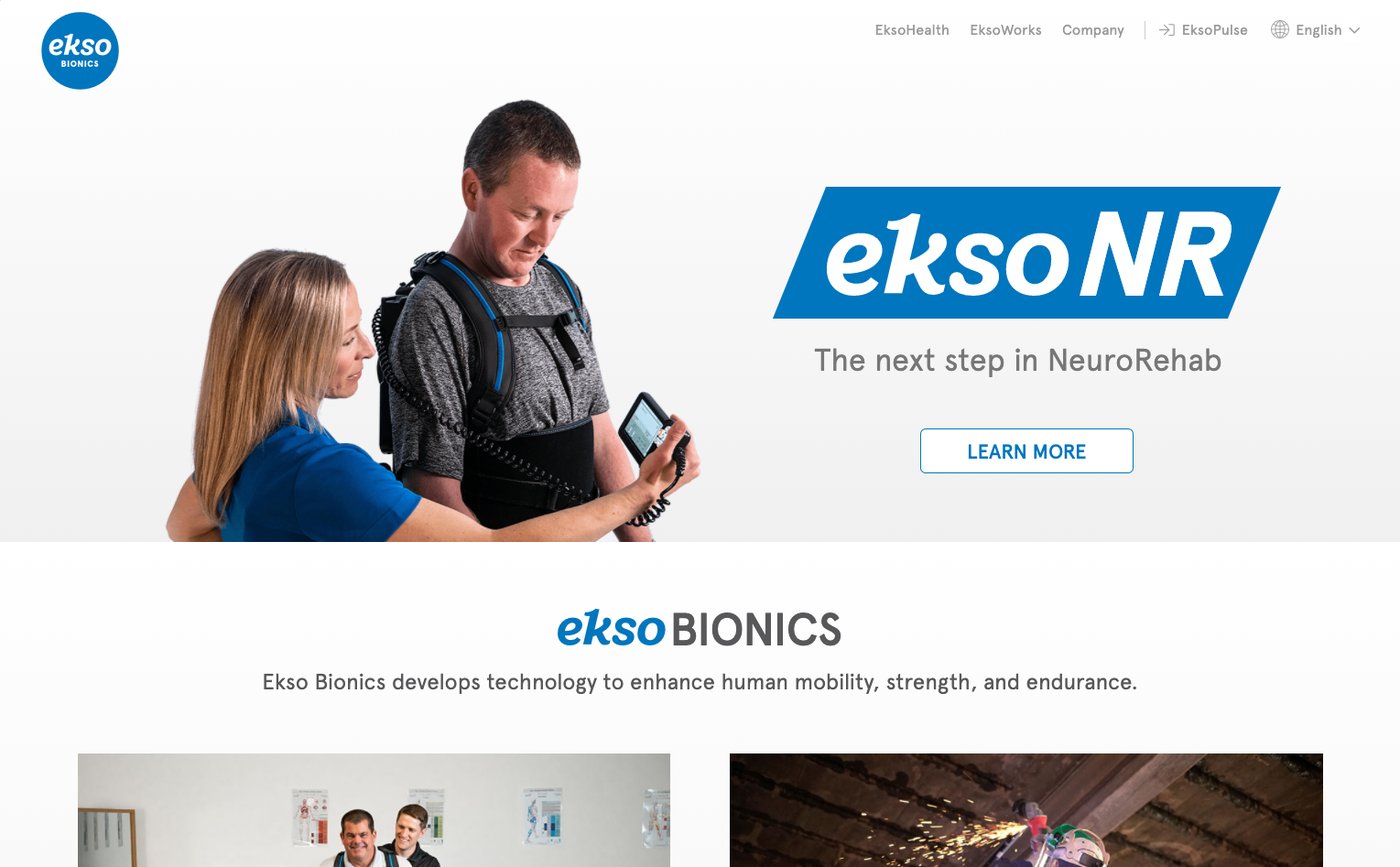
Selected artifacts — the rebrand
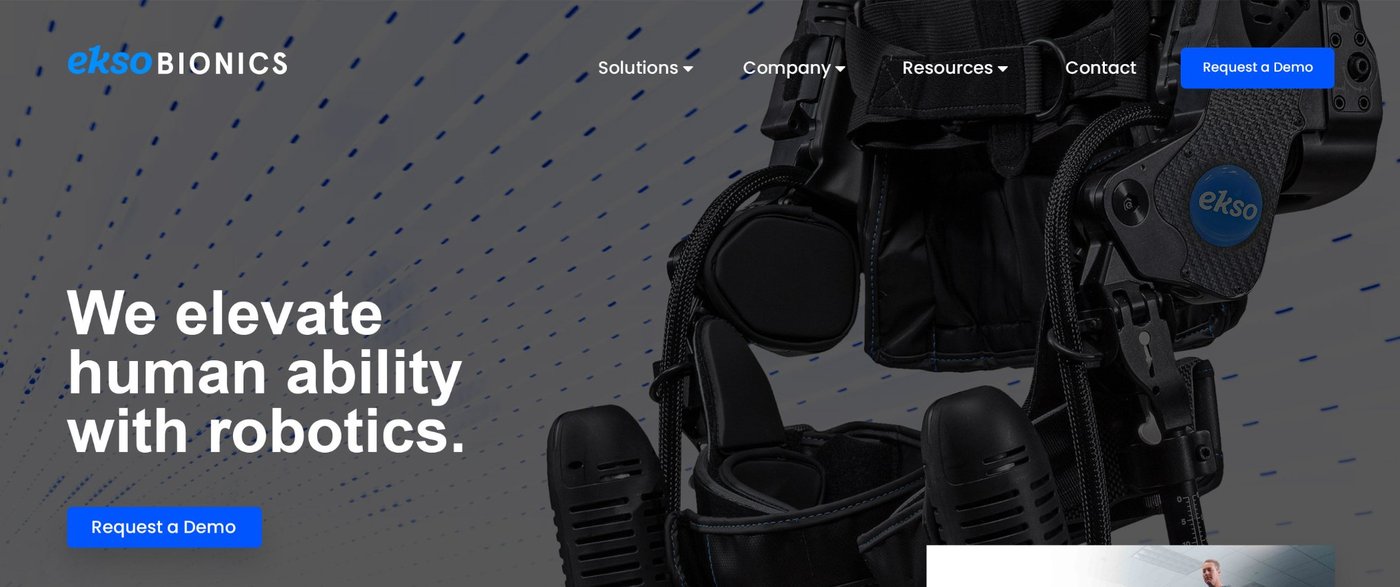
Ekso Bionics site before the rebrand
Before — split, product-led, no unifying story
Ekso Bionics site after the rebrand
After — one brand spine, two clear narratives