A car into acultural moment.
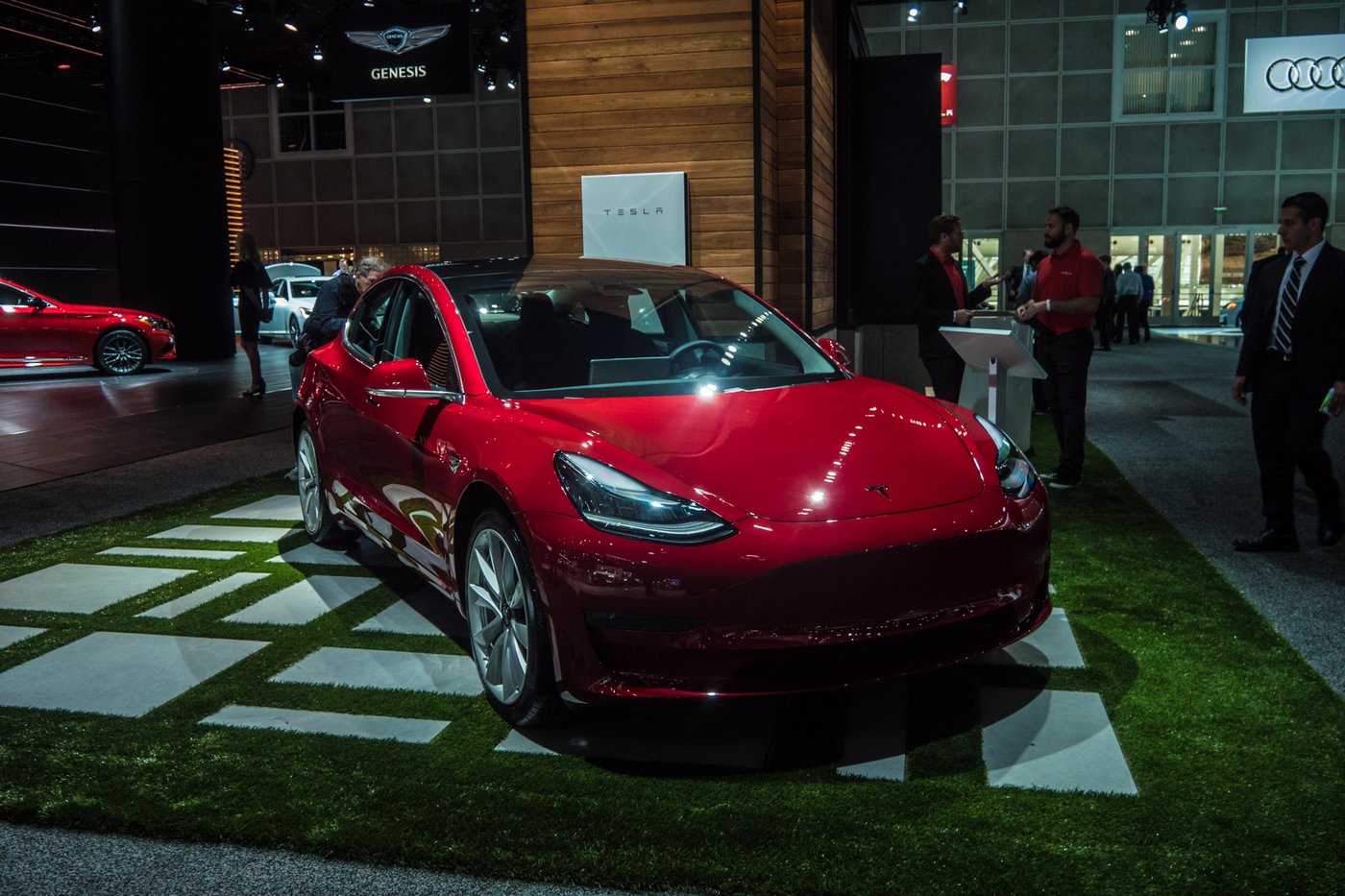
The Model 3's first public showing had to reach the mainstream, an audience that buys on meaning. I led Tesla's presence at the LA Auto Show, where the Model 3 met the public for the first time.
generated
captured
led
value
The situation
By 2017, Tesla had won the early adopters: the technologists, the environmentalists, the people who'd wait years for a car. The Model 3 was the company's bid for everyone else, and everyone else wasn't going to be persuaded by battery chemistry.
The brand challenge was translation: taking a product the faithful already understood and making it feel obvious (and desirable) to an audience that had never considered an electric car, at the exact moment the company needed to reach a much wider market.
The work
My role centered on brand experience and partnerships for the Northern California region. Two projects stand out: leading Tesla's presence at the LA Auto Show — the Model 3's first public showing — and authoring the retail showroom experience playbook that rolled out across the US.
What this demonstrates
Category-defining products still need cultural permission. The LA Auto Show was demand creation at the largest scale I've operated, but the mechanics were the same ones I use with early-stage companies: find the frame the audience already cares about, design the experience that proves it, and make the brand mean something beyond its spec sheet.
It's also where I learned that experience is narrative: a delivery, a debut, a showroom walk-through can carry positioning more convincingly than any campaign.